
40ft Shipping Containers.
Originally developed for international shipping, the 40ft container is now widely used for large-scale storage, logistics operations, industrial projects, and container-based conversions. Its size makes it particularly suitable for applications where efficiency, volume, and long-term use are key priorities.
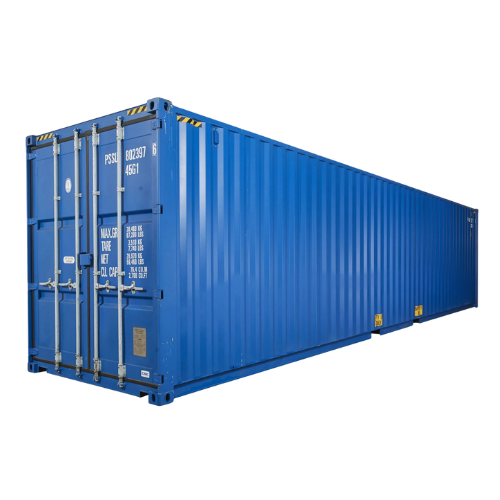
40ft Shipping Container Dimensions & Storage Capacity
External dimensions overview
A 40ft High Cube container maintains the standard 40-foot footprint while increasing overall height for additional cargo capacity.
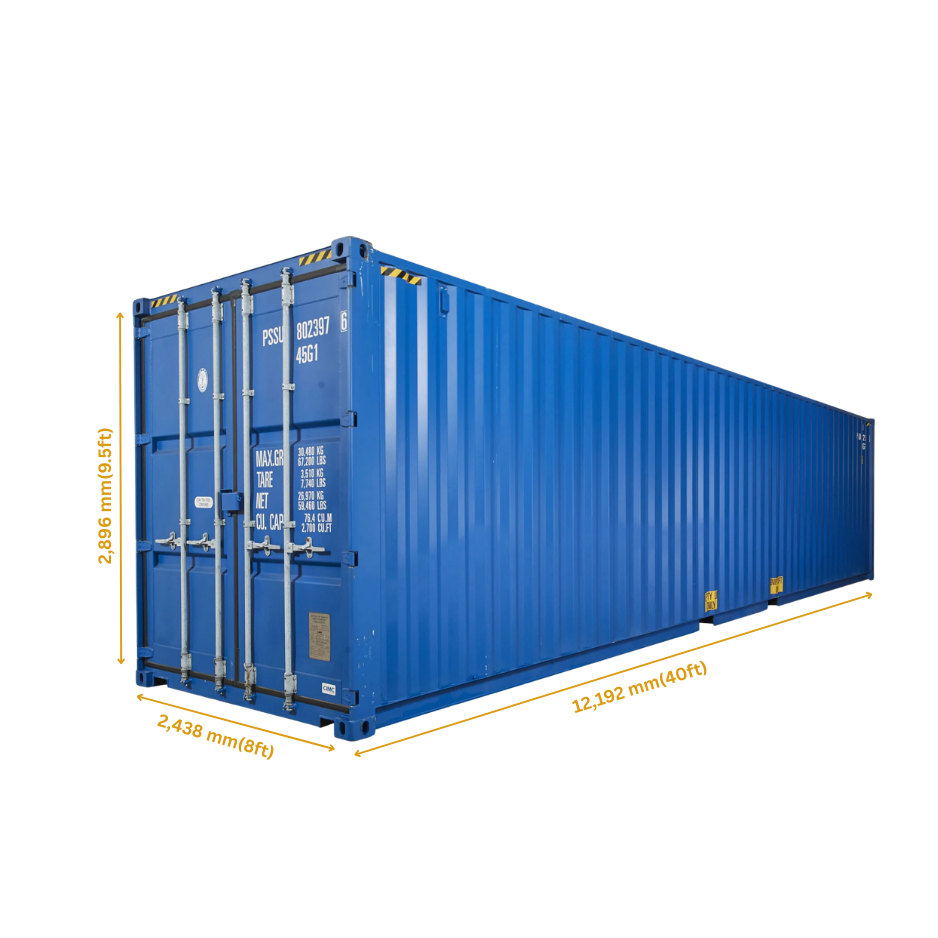
The external dimensions are approximately:
- Length: 12,192 mm
- Width: 2,438 mm
- Height: 2,896 mm
The key distinction is the total external height of 2.896 meters, which is about 30 cm taller than a standard-height container. This increased height does not change handling compatibility — it remains fully ISO compliant and suitable for road, rail, and sea transport — but it significantly enhances internal storage potential.
In terms of internal volume capacity, a 40ft High Cube container provides approximately 76.4 cubic meters (m³) of usable space. This expanded cubic capacity makes it particularly efficient for volume-driven cargo such as packaged goods, stacked pallets, lightweight bulk products, modular fittings, or converted office and technical units.
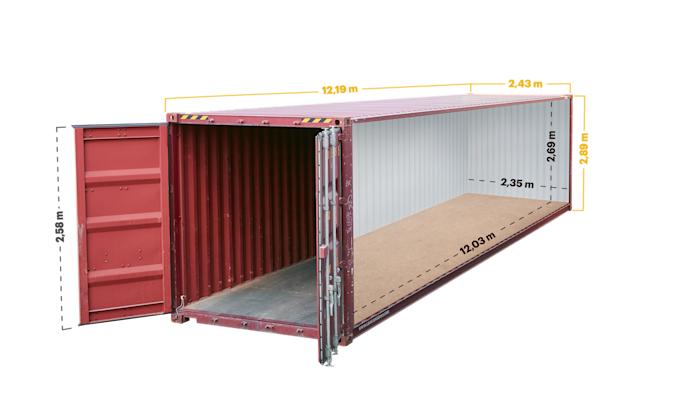
Internal space and usable volume
A 40ft High Cube container keeps the same footprint as a standard 40ft unit but adds crucial vertical space. The internal dimensions are approximately:
That increased internal height (about 30 cm more than standard) is the real game changer. It allows better stacking efficiency, easier forklift maneuvering, and more usable vertical storage for palletized goods or tall equipment.
In terms of capacity, a 40ft High Cube offers roughly 76.4 cubic meters (m³) of internal volume. That’s a significant increase over the standard 40ft (around 67–68 m³), making it particularly suitable for:
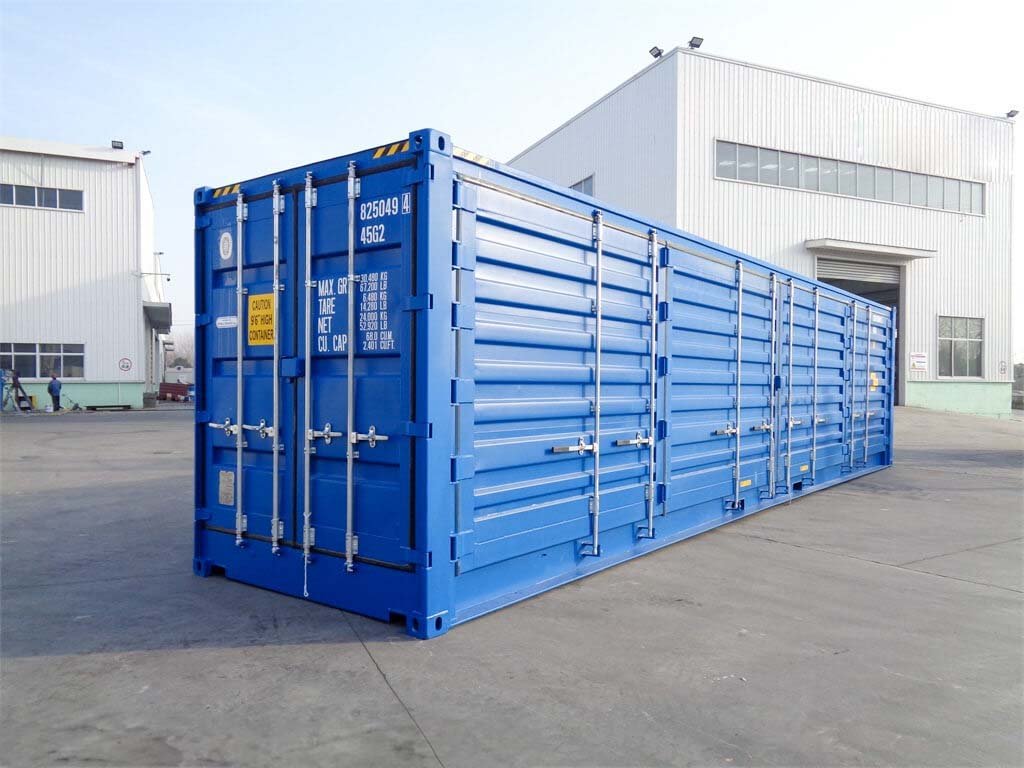
Common Uses of 40ft Shipping Containers.
Large-scale storage and warehousing
40ft containers are widely used as temporary or permanent storage units for inventory, raw materials, and finished goods, especially where warehouse space is limited or unavailable.
Transport and international shipping
As a core unit in global logistics, the 40ft container is ideal for transporting large volumes of goods efficiently across long distances.
Construction and industrial projects
On construction sites and industrial projects, a 40ft container serves as a secure storage space for equipment, materials, and machinery.
Container conversions and modular builds
The length and internal space of a 40ft container make it suitable for conversions such as offices, workshops, storage facilities, or modular buildings.
Buying a 40ft Shipping Container
Before purchasing a 40ft container, careful planning is essential due to its size. You have to first of all decide which condition you are looking for. Either you are in the market to buy a used 40ft container or to buy a new 40ft container.
What affects the price of a 40ft container
Pricing depends on:
- Condition (new or used)
- Container type (standard, high cube, refrigerated)
- Market availability
- Delivery distance and access requirements
Delivery and unloading requirements
Due to their length and weight, 40ft containers require sufficient access for delivery vehicles and appropriate unloading equipment such as cranes or side loaders.
Site access and space considerations
Adequate clearance, a level surface, and proper access routes are critical to ensure safe and efficient placement.
Is a 40ft Shipping Container Right for Your Project?
A 40ft shipping container is best suited for projects that demand high capacity, efficiency, and long-term reliability. It is particularly effective for commercial, industrial, and logistics-focused applications.
For buyers with sufficient space and large storage or transport needs, the 40ft container offers unmatched efficiency within the standard container range.
Frequently Asked Questions About 40ft Shipping Containers
Use this space to provide your website visitors with a brief description on what to expect before clicking on a section title.


